Fat Loss vs Muscle Gain – The Difference.
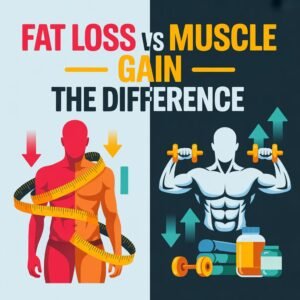
Fat loss vs muscle gain are two purposes that take over the majority of the discussions in sphere of fitness and body transformation. Although used interchangeably, they are two entirely different physiological processes, which need different approaches, plans, and anticipations. The problem with most individuals is that they believe that fat loss vs muscle gain occur at the same rate, yet this is not the case and the body has different priorities on how it can perform the functions according to nutrition, training, recovering and hormonal environment. It is paramount to know the distinction that exists between fat loss vs muscle gain in order to have realistic goals and in order to create an effective fitness plan.
Fat loss is the process whereby one loses the stored body fat, which is stored body fat that is used as an energy store by the body. This happens by the body being in a caloric deficit whereby the body takes fewer calories than it uses up. In cases where the energy intake is less than what is required to sustain daily needs, the body will resort to making up the difference using the stored fat. In the long run, it results in reduction of body fat percentage and physical appearance changes, including a slim waist and better body definition.
Nutrition is one of the major contributors in fat loss. Although exercise can significantly contribute to the supporting role particularly resistance training and cardiovascular activity, the key determinant of whether fat loss will be achieved is the diet. A balance of macronutrients, consistent caloric maintenance, and sufficient protein intake, and sustainable eating habits are essential. It is unlikely that in the absence of a caloric deficit, the fat will be lost, no matter how vigorous the training program is.
What Is Muscle Gain?
Muscle hypertrophy or muscle gain is the process through which the size and strength of skeletal muscle fibers increase. This is done when muscles are subjected to gradual resistance like weight training and then provided with proper nutrition and rest to be fixed and become stronger. In contrast to fat loss, muscle gain is normally a caloric surplus that involves the body taking in more calories than it uses which gives it enough energy and nutrients to develop tissue.
Protein consumption is the key factor in muscle growth since protein provides amino acids that are required in repairing and building up muscles. Moreover, resistance training should be progressive i.e. there is a continuous overloading, overloading, or overintensity to the muscles. Gaining of muscles is more gradual than fat loss because it can take months or even years before visible results are realized.
Understanding Fat Loss vs Muscle Gain: Key Insights
Comparing Fat Loss vs Muscle Gain: What You Need to Know
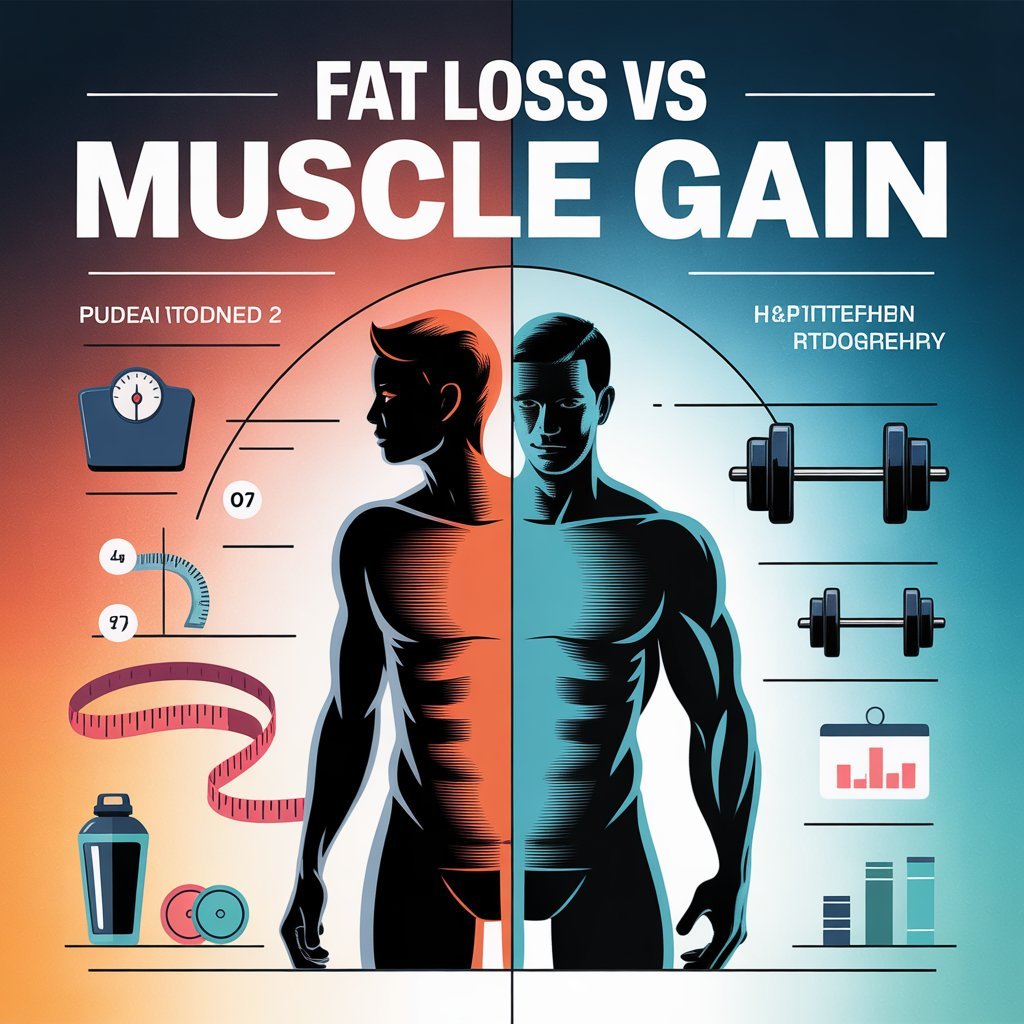
The greatest discrepancy between fat loss and muscle gain is in energy balance. Caloric deficit is necessary to lose fat whereas a caloric surplus is usually needed to gain muscle. These two states are opposing and hence, it is difficult to maximize the two processes at the same time; this is why the body is more difficult. This is the reason why most fitness programs currently aim at only one main objective, what most people call, cutting (fat loss) or bulking (muscle gain).
The other major difference is the measurement of progress. The most popular ways of tracking fat loss include the body weight, body fat percentage, measurements, or visual appearance. Strength increase, muscle measurements, progress photos, and performance improvements are, on the other hand, more effective in measuring muscle gain. The scale is not a reliable indicator since the muscle development may also compensate fat reduction regarding body weight.
The Methods of Training to lose fat vs muscle gain.
Fat loss and muscle gain training are dissimilar but display some overlap. In fat loss, the main objective is to enhance the total energy consumption with keeping lean muscle mass. Resistance training is necessary as it assists to sustain muscle mass in the case of caloric deficit, whereas cardiovascular exercises may raise the caloric consumption and enhance heart condition. A high level of intensity and regularity of training is more critical than high volume.
In order to gain muscles, the priority goes to resistance training. The workouts are designed in such a way that they exercise the muscles to overload progressively using both the compound and the isolation exercises. The amount of training, resting intervals, and modes of exercise are also well-calculated to provoke muscle development. Cardio can be restricted or planned in such a way that it does not disrupt to the needs of recovery and caloric surplus.
Urban Dietary variations in the Two Objectives.
Fat loss and muscle gain nutrition approach is quite different. Calories are the best priority during fat loss. Protein is also taken in large amounts to ensure the muscle mass and carbohydrates and fats are regulated to keep the caloric deficit. Dietary selections tend to lean towards foods with high amounts of nutrients, which are lower in calories and allow satiety and compliance.
Conversely, the nutrition of muscle gain focuses on the adequate amount of calories and nutrients to promote development. Protein consumption is maintained whereas the carbohydrates are augmented to energize training performance and recovery. Hormonal balance is also something that is promoted by healthy fats. Even during a building stage of a muscle, although a small amount of fat can be gained, it is usually controlled by a slight caloric overload and not by over eating.
Is It possible to lose fat and build muscles at the same time?
Fat loss and muscle gain are opposite processes, but under some conditions one can attain both of them at the same time, a phenomenon commonly referred to as body recomposition. It is most prevalent in the novices, people who have not trained in a long time, or with a greater body fat content. When such happens, the body is able to use the stored fats as a source of energy and build muscles using resistance training and proper intake of proteins.
But at the body fat percentages that are lower in experienced trainees, body recomposition is far much slower and inefficient. This is why it can be more successful and foreseeable to divide objectives into different stages. Knowing your place on this continuum can help you to have realistic expectations and can also prevent frustration.
Inaccurate Myths and Fallacies.
One of the myths is the fact that muscle becomes fat or fat becomes muscle. In practice, fat and muscle are totally different tissues and will not be able to transform into each other. The other myth is that too much cardio is all that is required to burn fat and maintain muscle. In intense dieting, a lot of muscle loss may take place without resistance training and correct nutrition.
On the same note, most individuals feel that to build muscle, one needs to bulk and gain weight at a very high rate. The fact is that the gradual and controlled muscle gain will have better long-term results with minimum unwarranted fat gains. The knowledge of these myths can guide people in making the right choices and prevent ineffective and dangerous strategies.
Selecting the Right Goal to You.
The question of whether to lose fat and gain muscles or do the reverse is a personal choice that is determined by factors like the body composition, fitness level, lifestyle and preference. The individuals who are overweight in terms of body fat might be the ones who need to focus on burning fat and retaining the muscles. Slim people or individuals aiming at better body power and shape can emphasize on the growth of the muscles. Substituting some phases by taking turns or going slowly towards recomposition is sometimes a good trade-off.
Conclusion
The two types of fitness goals are fat loss and muscle gain, which are different, yet closely related and demand particular strategies and expectations. The fat loss is concerned with establishing a caloric deficit and body composition and the muscle gain is concerned with progressive training, proper nutrition, and recovery. The knowledge of the distinctions between these processes enables the individuals to make better plans, monitor the progress, and attain sustainable outcomes. Training and nutrition become much easier to achieve long-term success in the field of fitness when the goal is aligned to the right one.
For More Updates and study about Gym Workouts, Fat Burn, Muscle gain or Wants Training Contact Us

I’m Choudhary Haseeb Jutt {AJ Romeo} as a nickname.
I’m a web developer and content writer and SEO Expert.